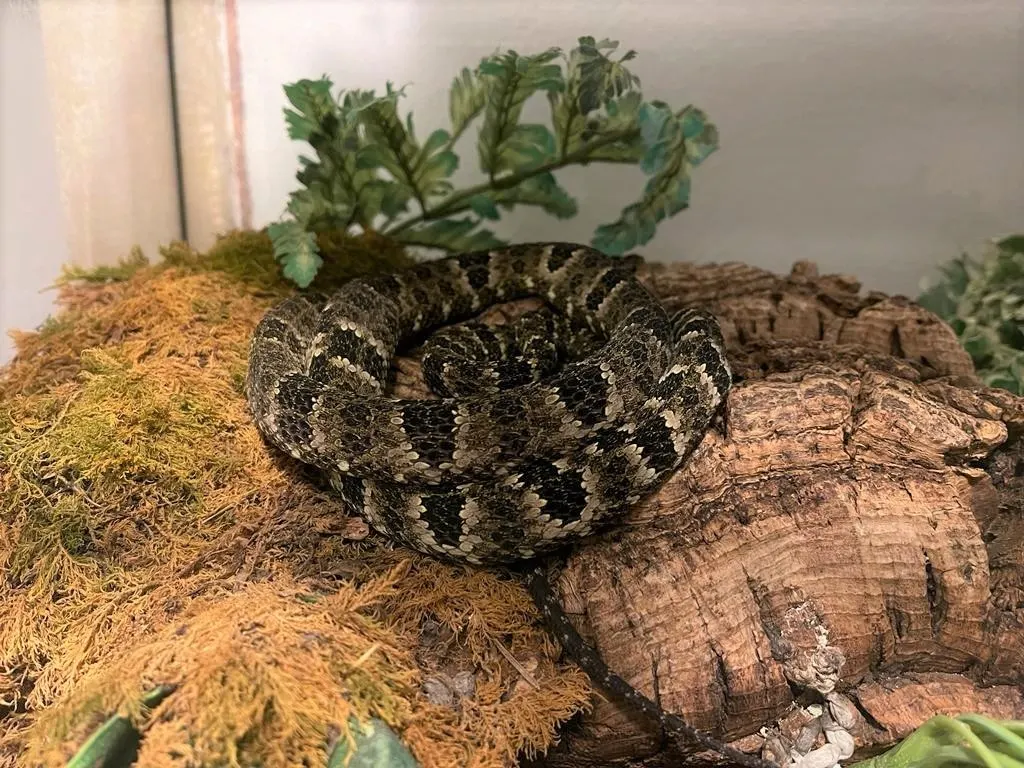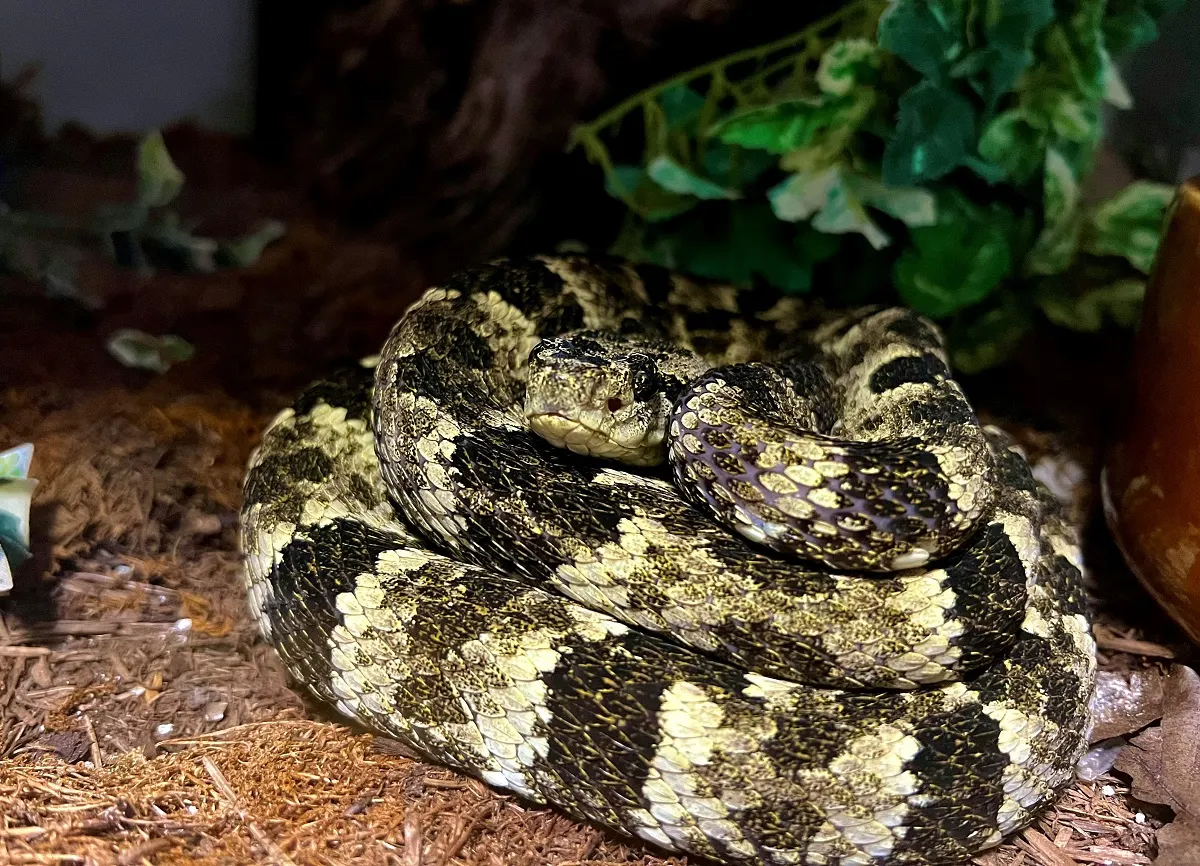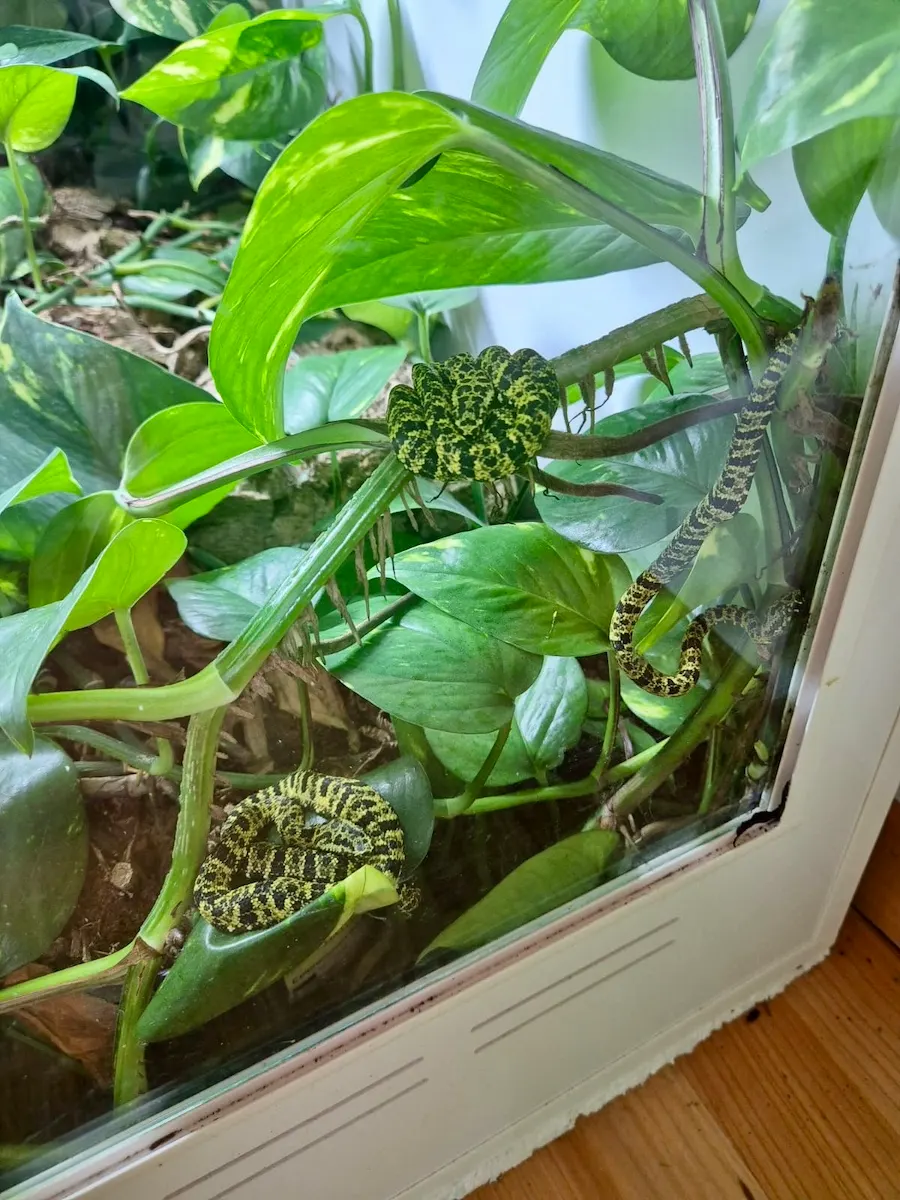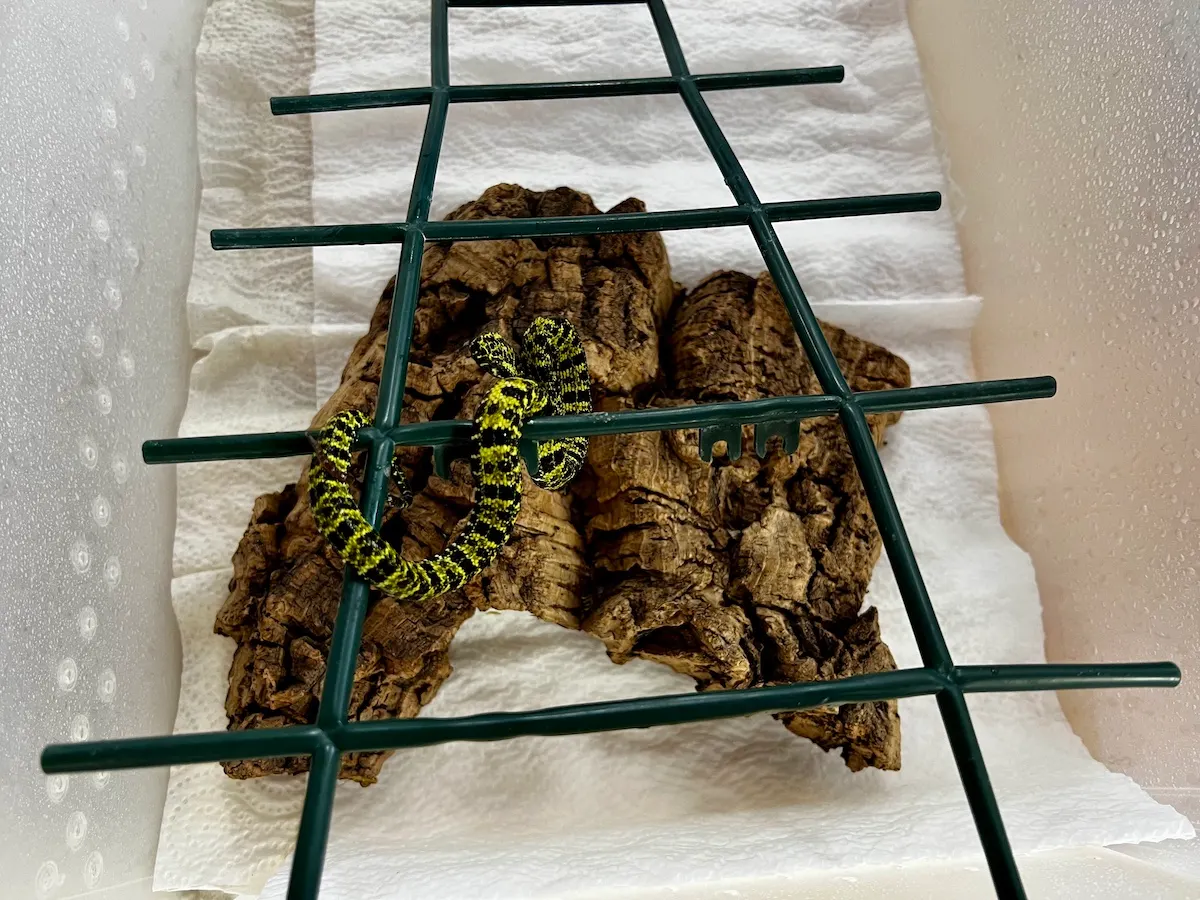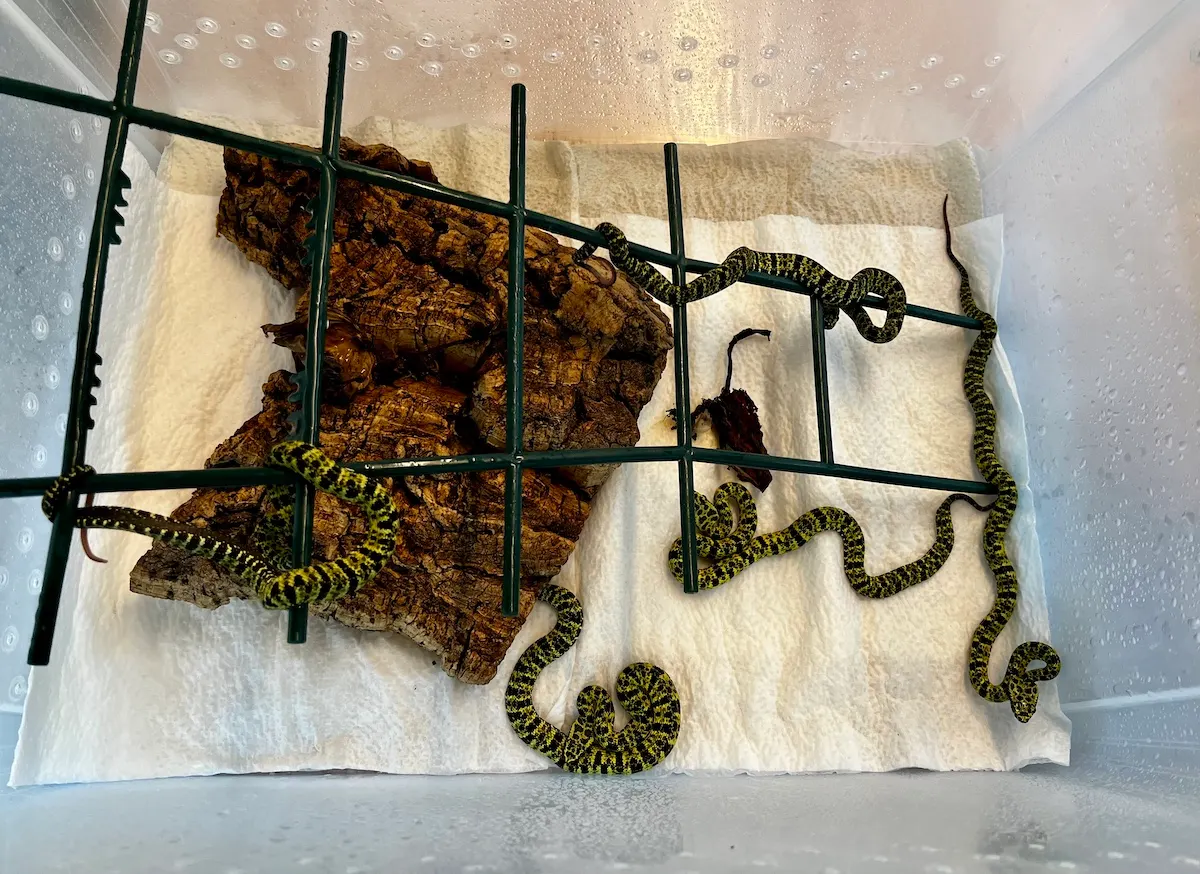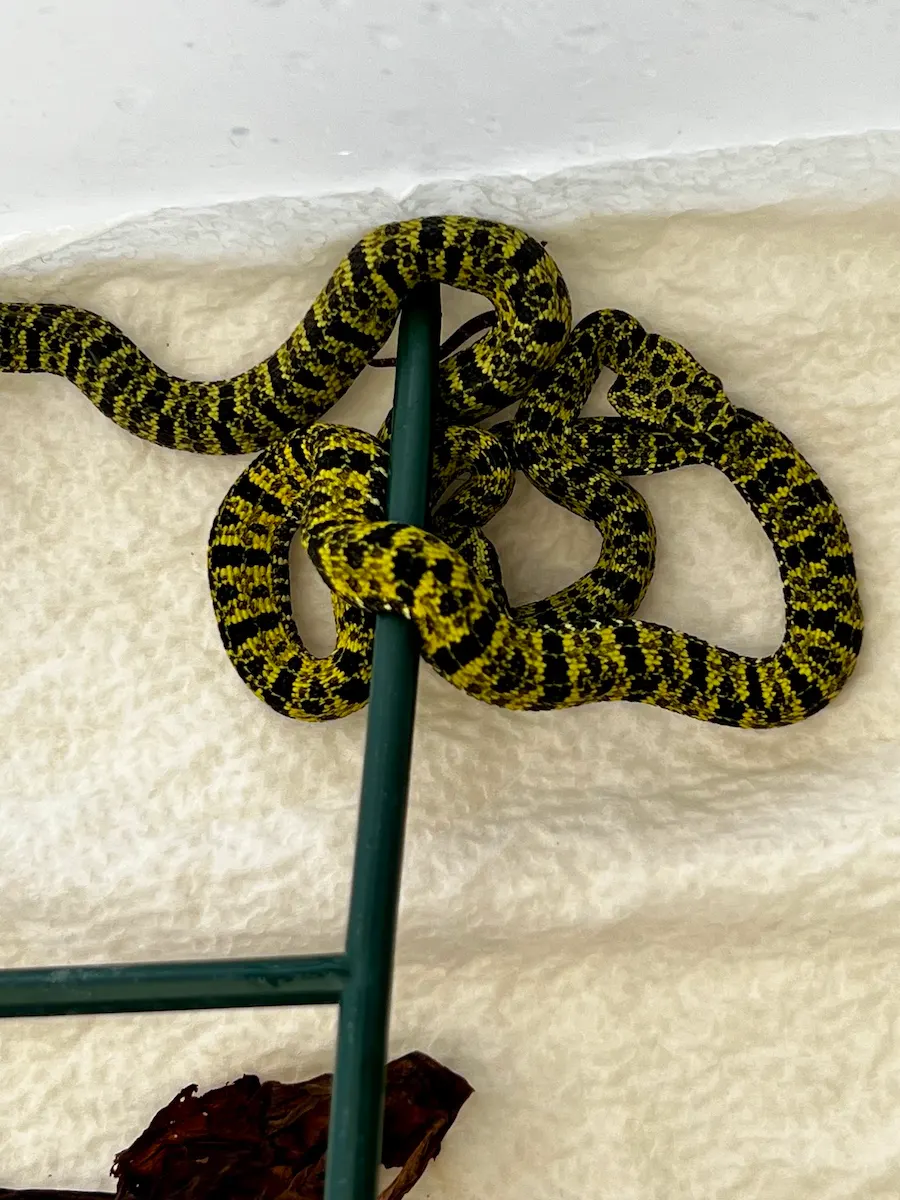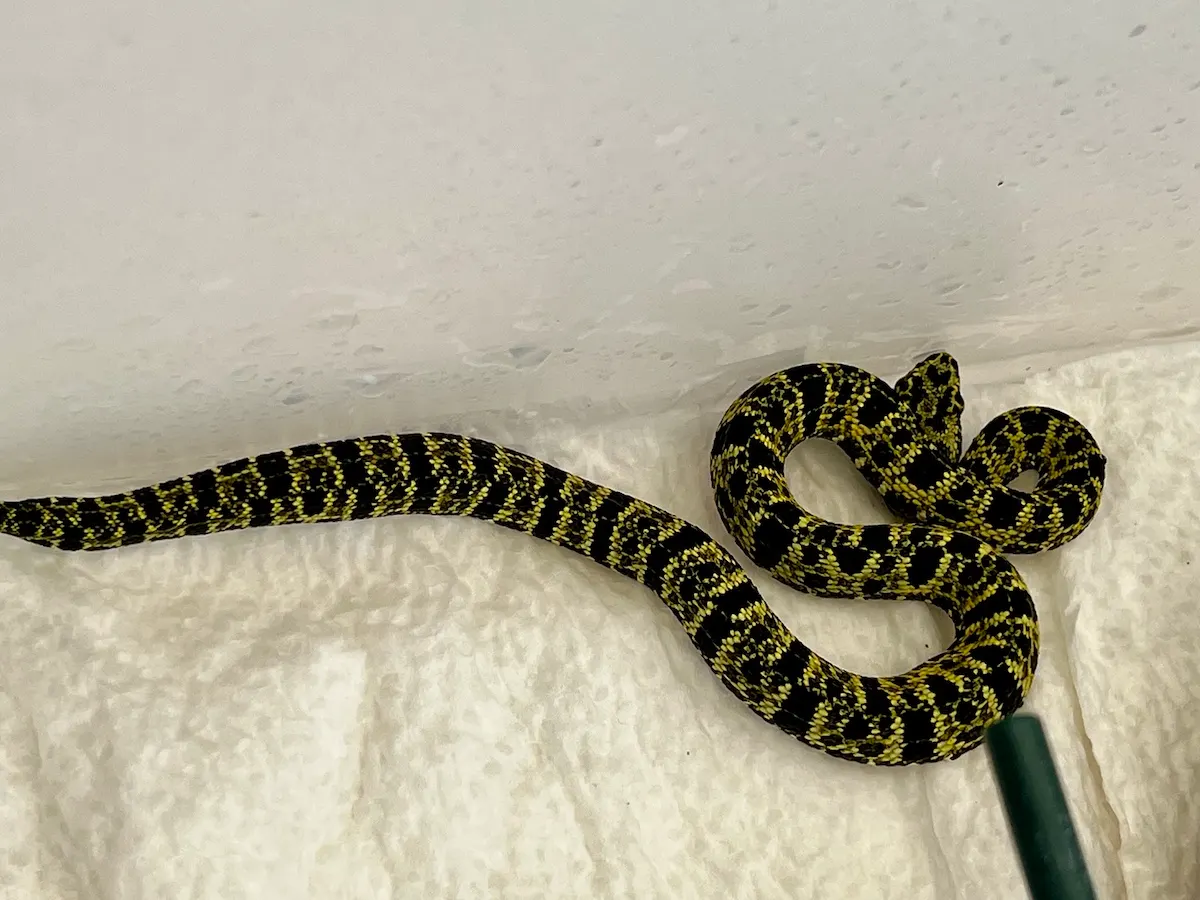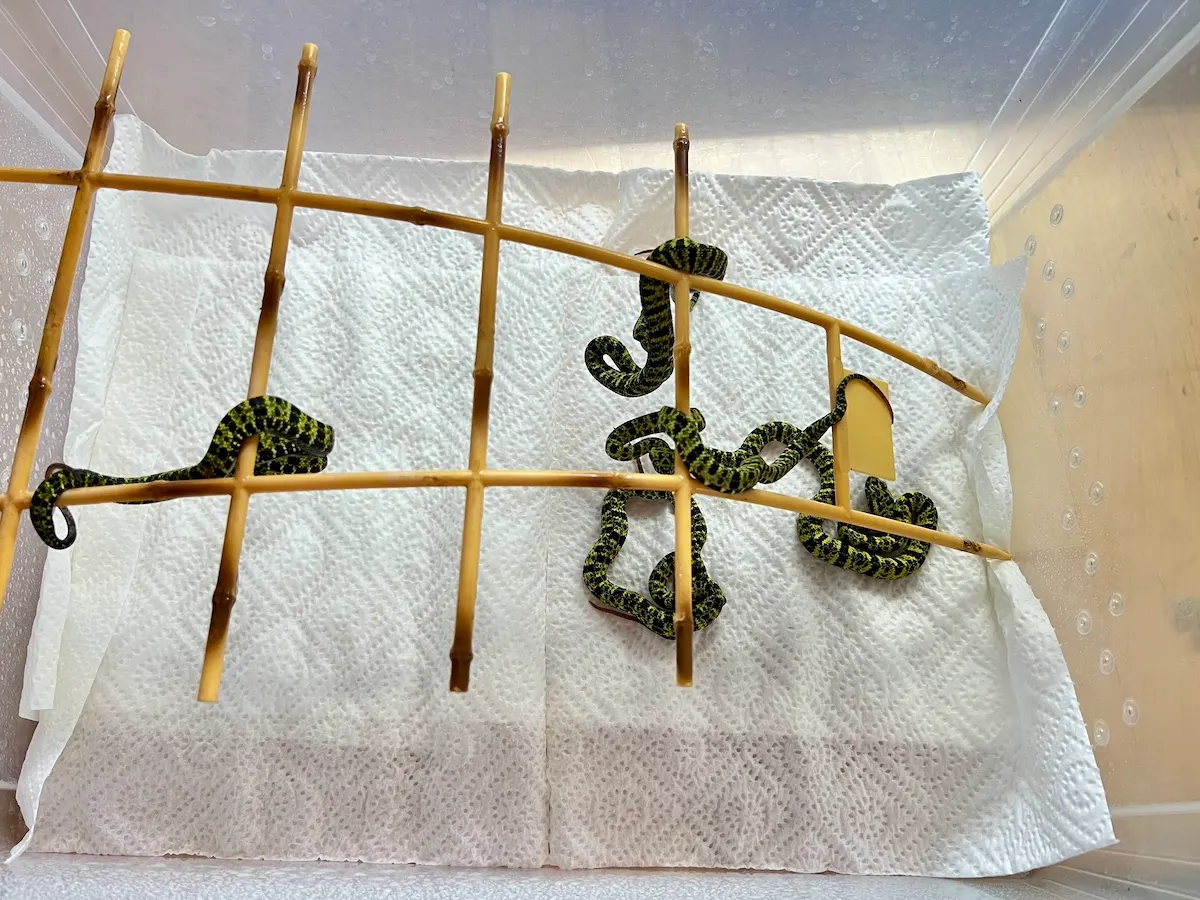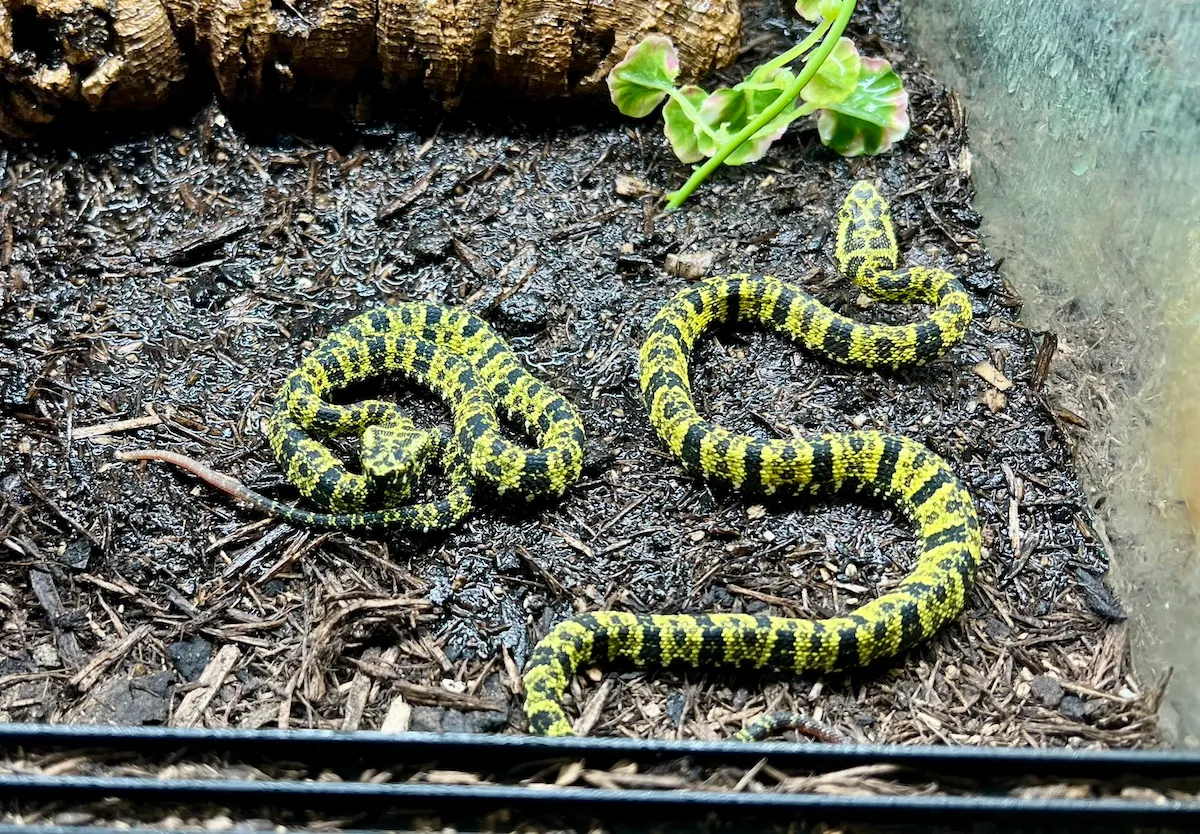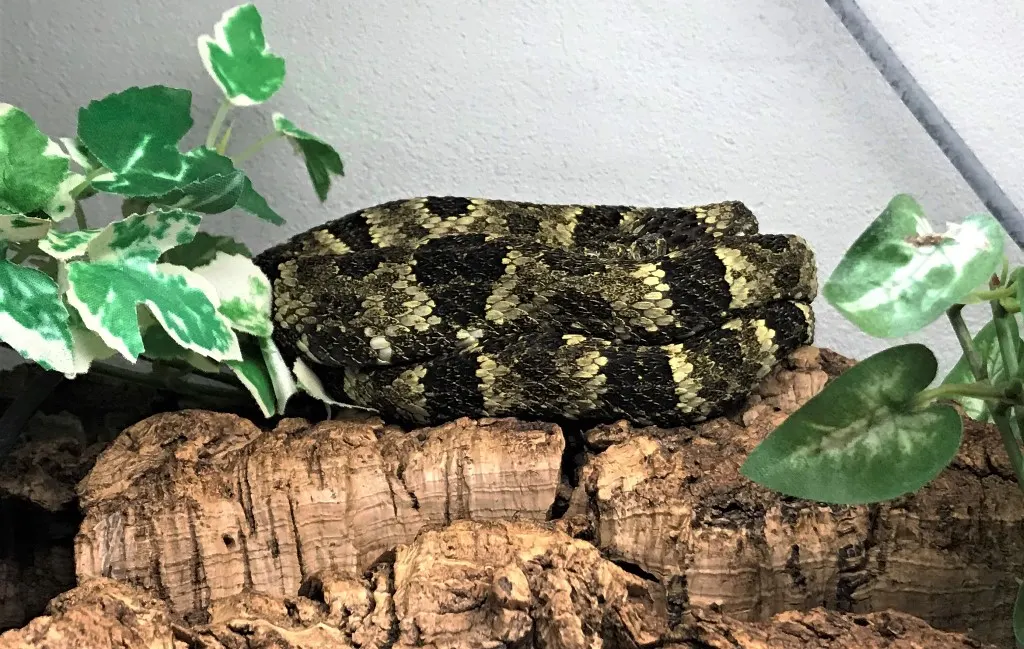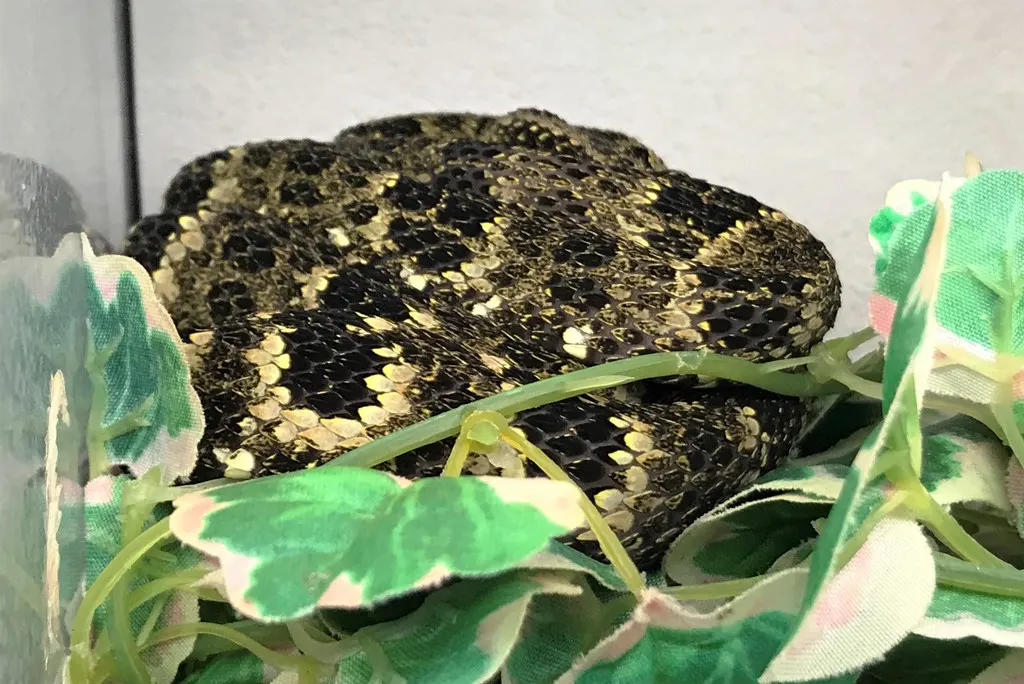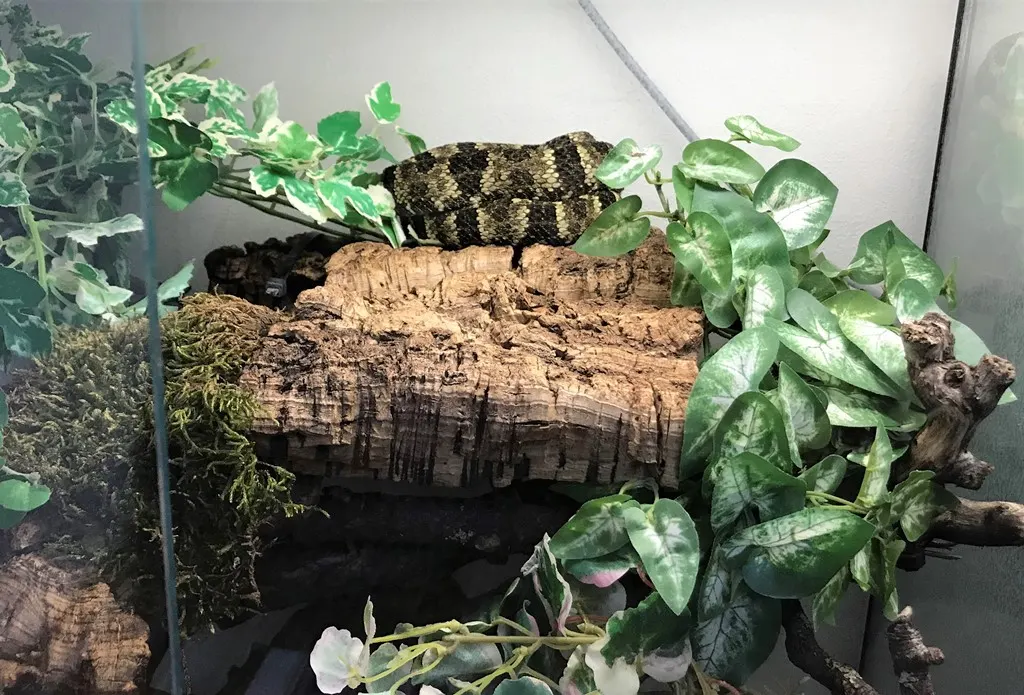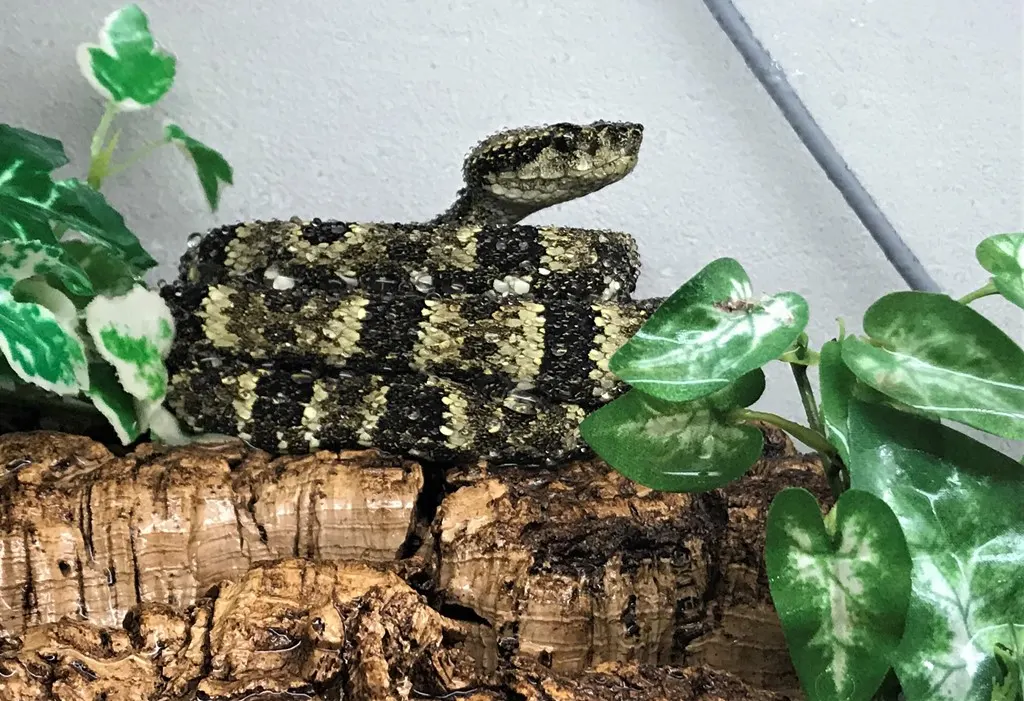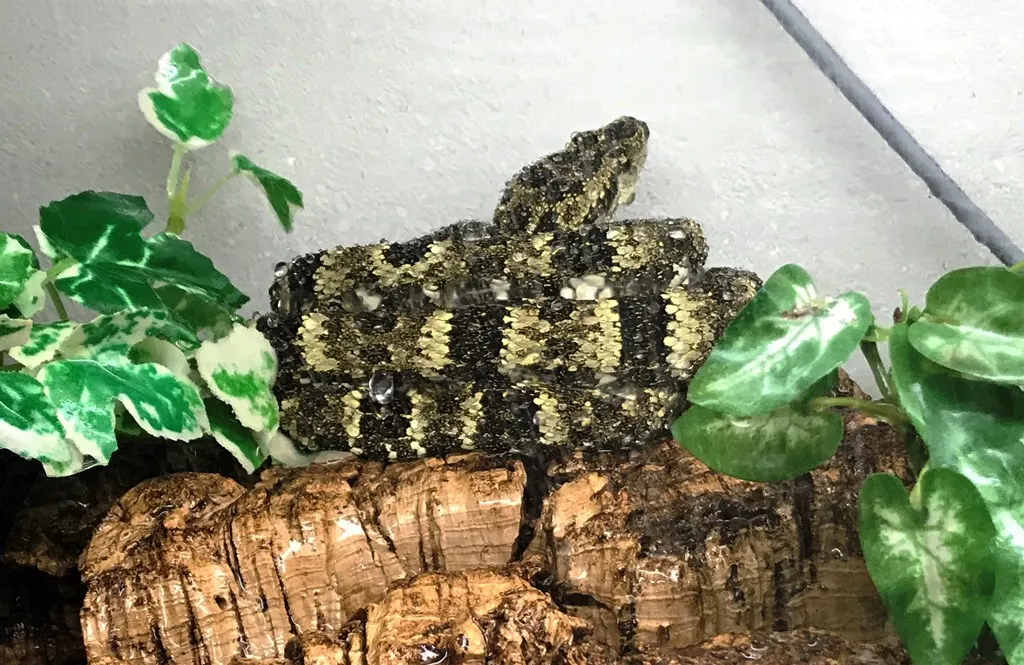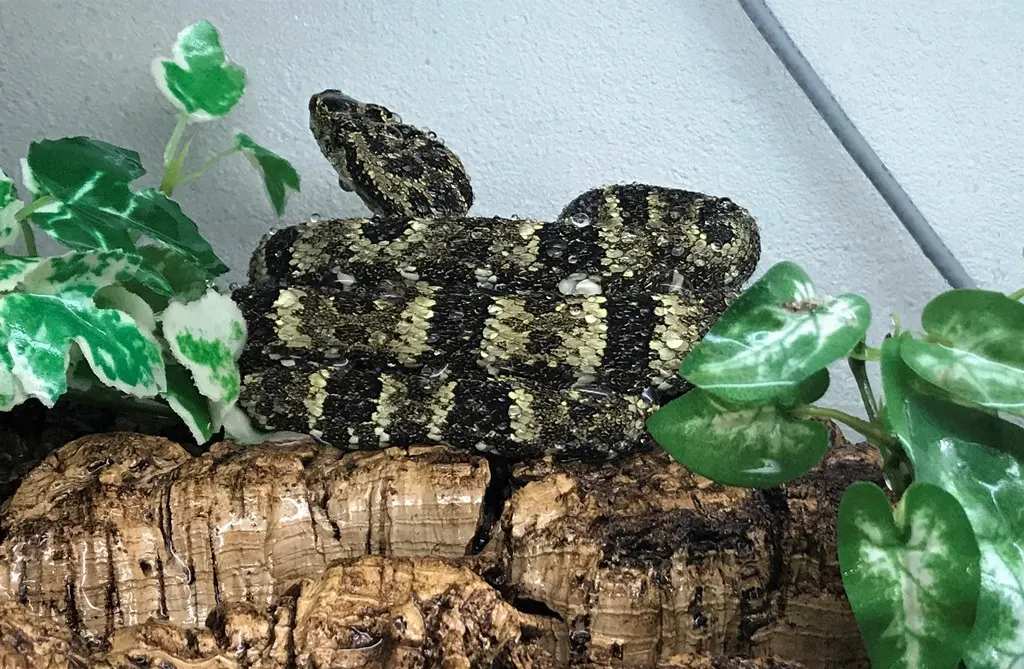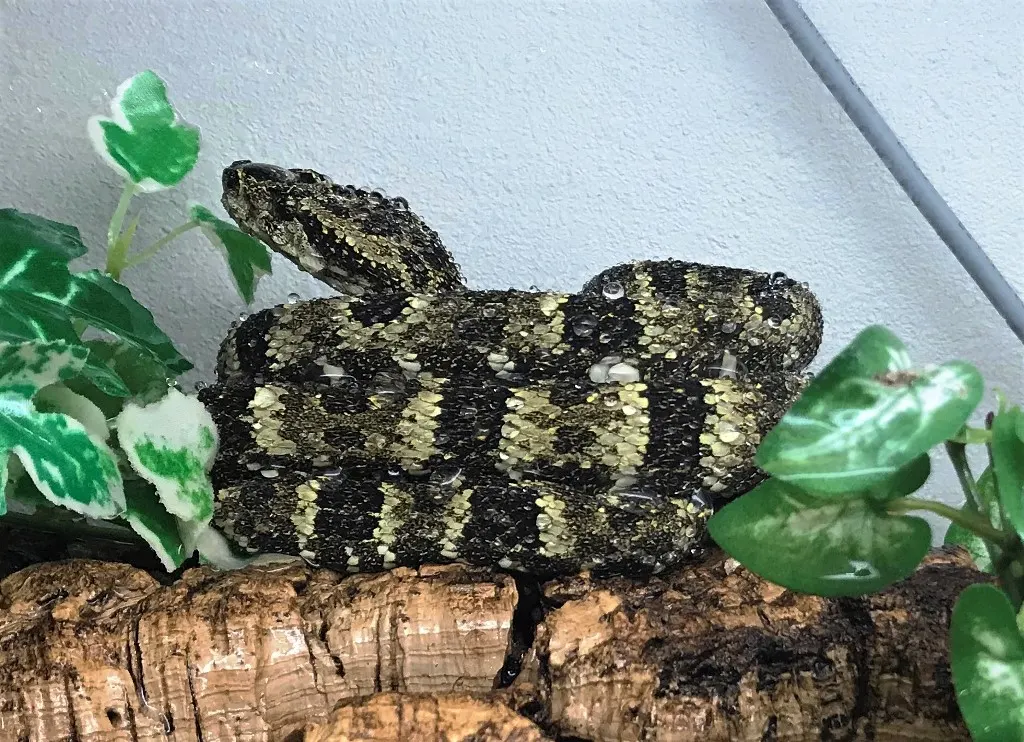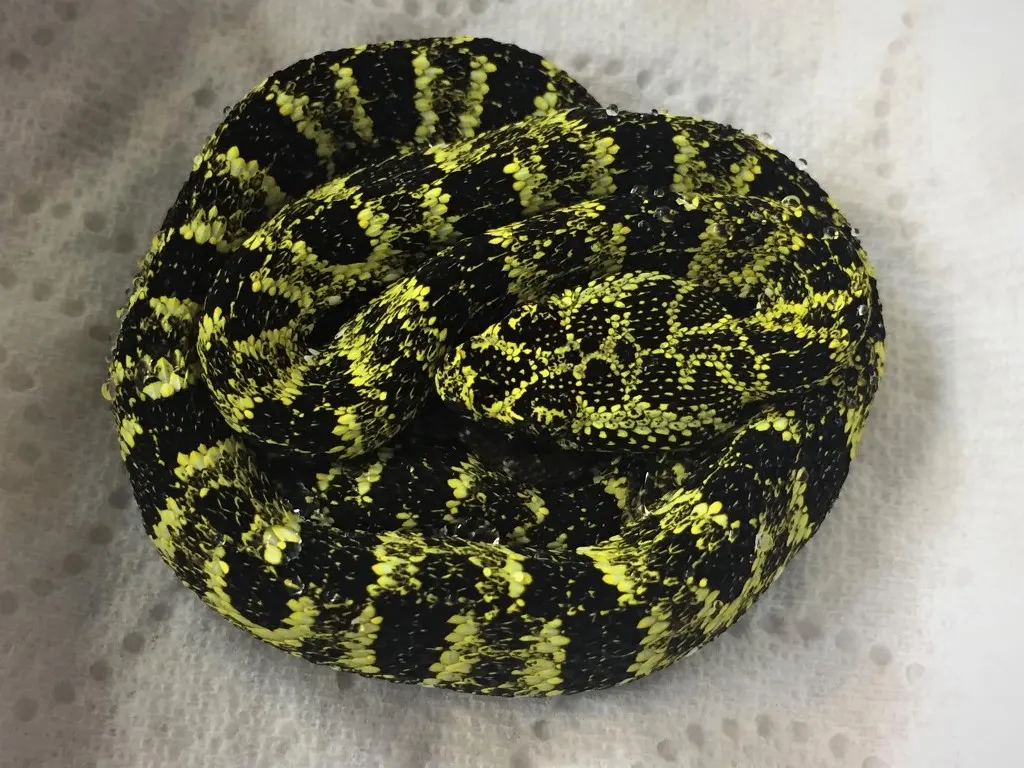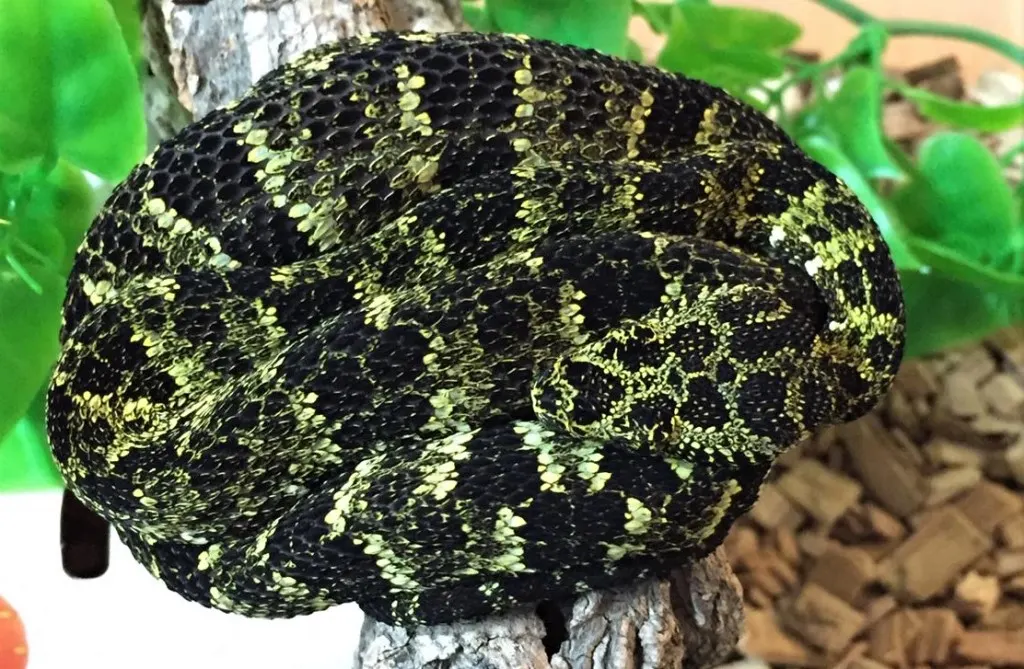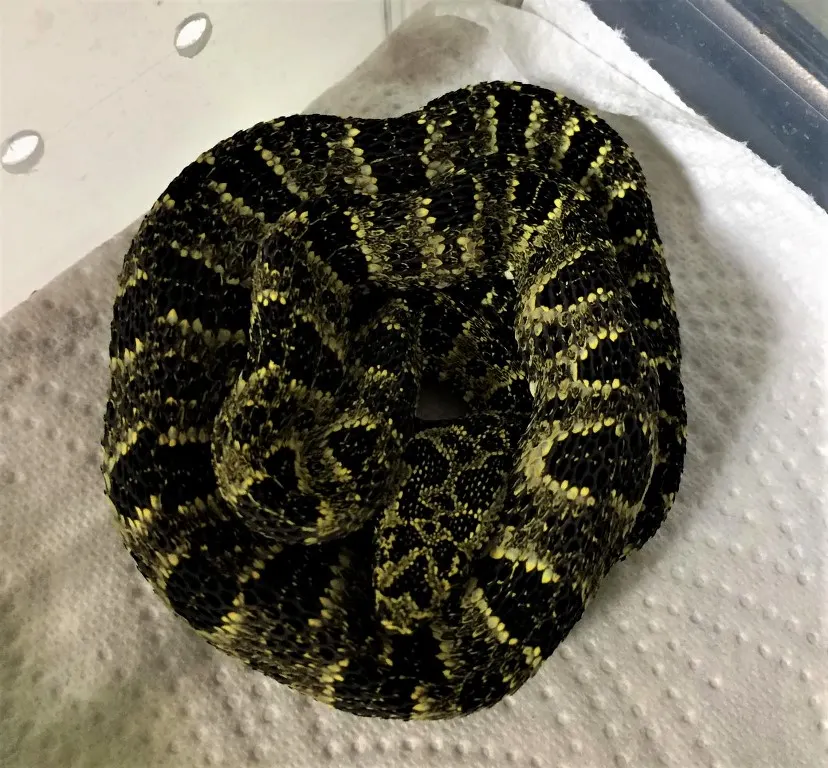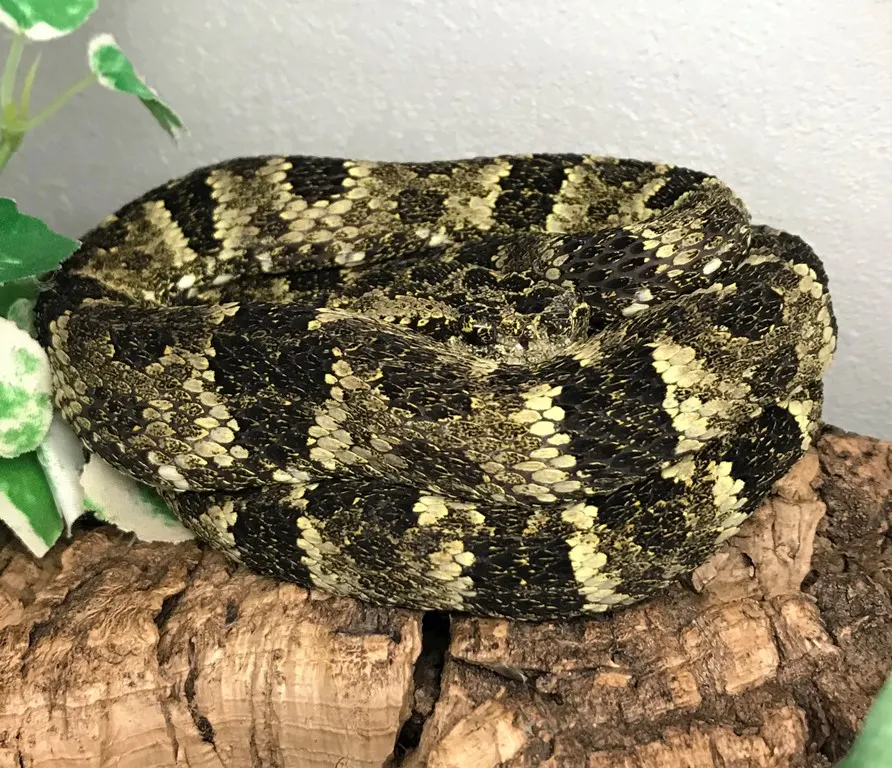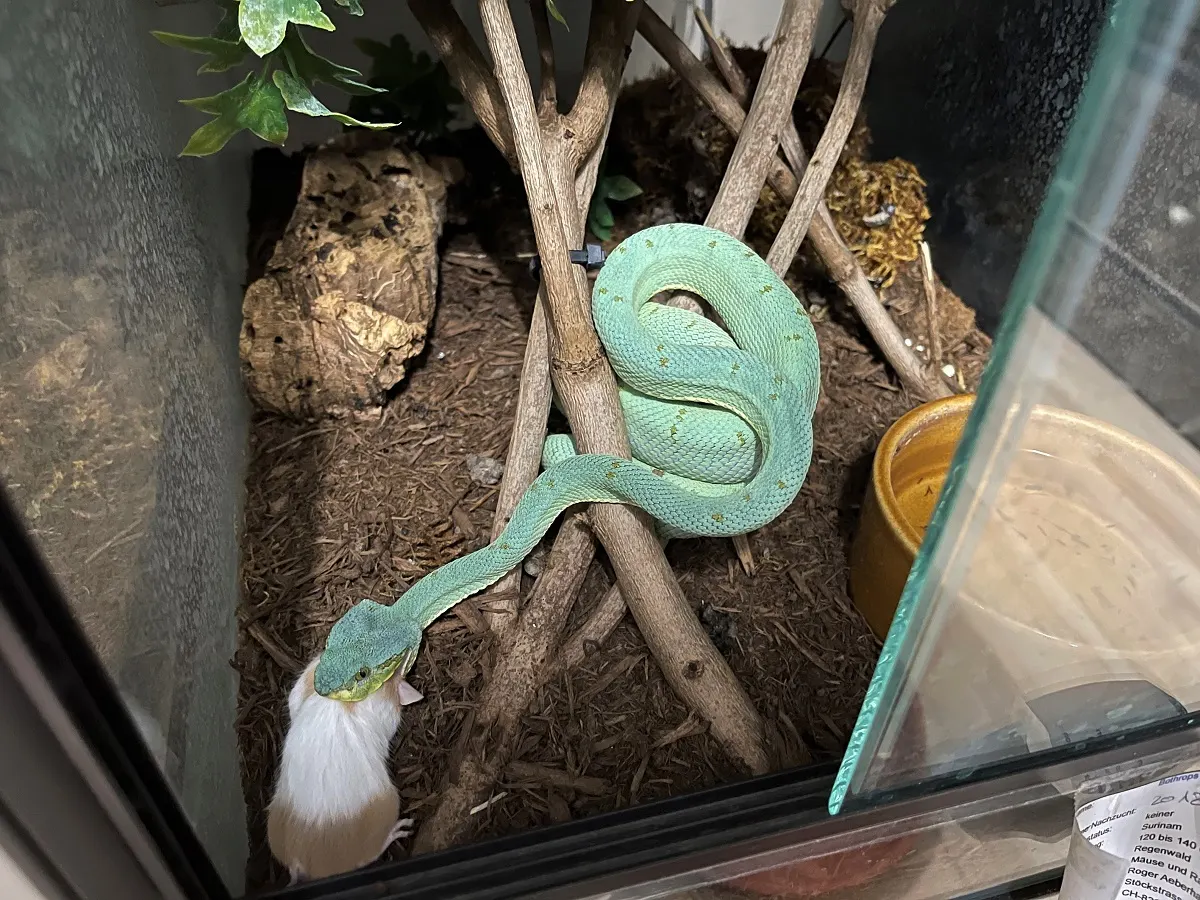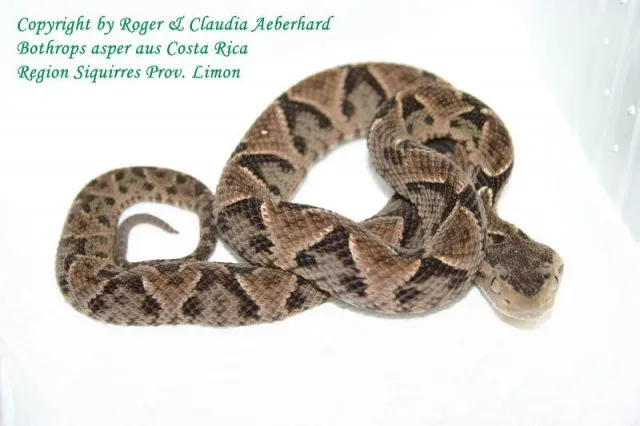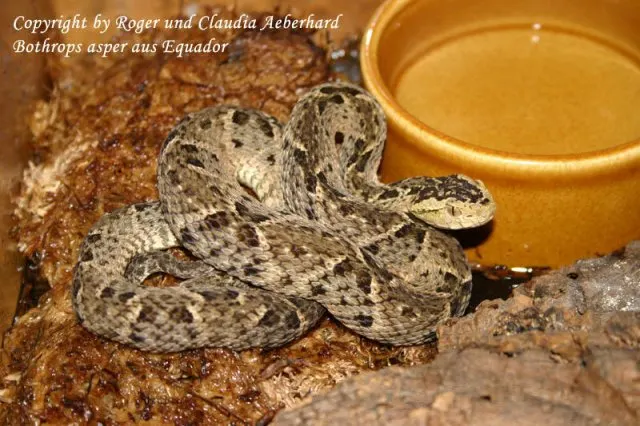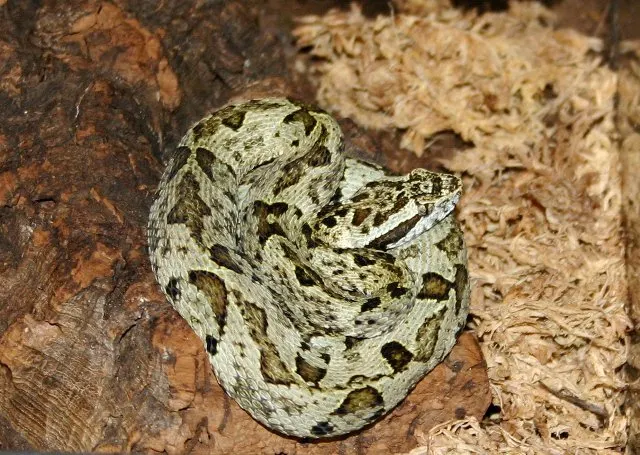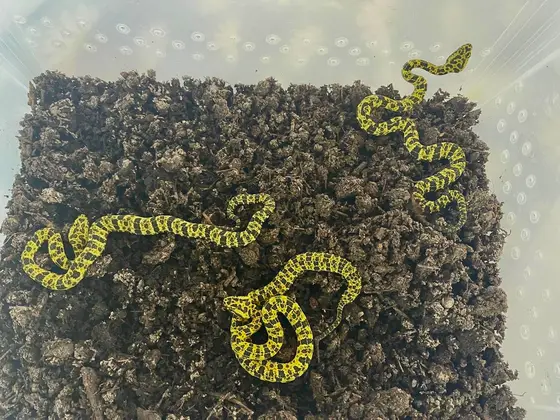
Gefleckte Lanzenotter, (WAGLER 1824)
Verbreitung: Bolovien, Brasilien, Kolumbien, Ecuador, Französisch-Guyana, Peru, Surinam, Venezuela - taeniatus lichenosus
Unsere Tiere sind schweizer-Nachzuchten und ursprünglich aus Ecuador, Rio Nangaritza, Zamora-Chinchipe.
Länge: die Weibchen sind zwischen 150-180cm, selten mehr und die Männchen sind zwischen 100-120cm.
Haltung und aussehen:
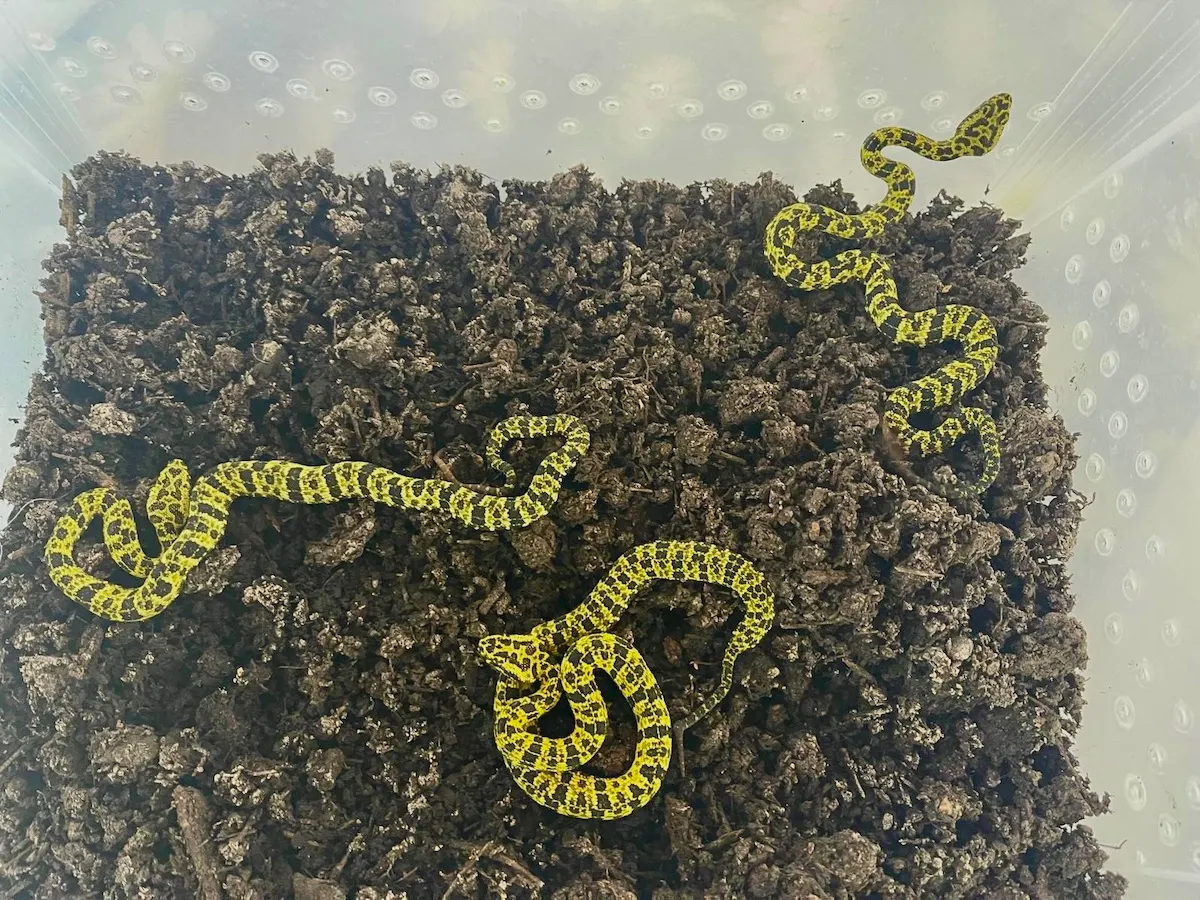
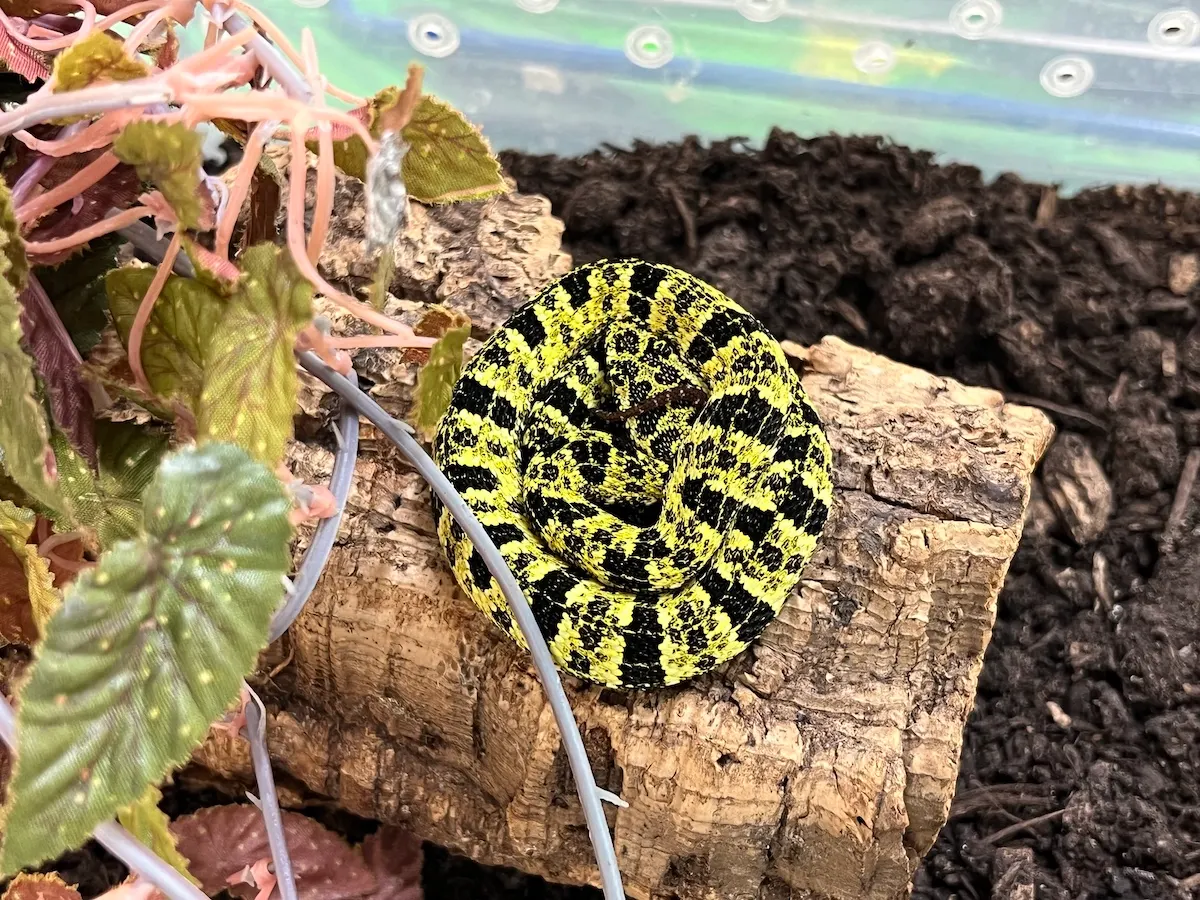
Die Grundfärbung ist hell- weissreme bis gelb mit schwarzen und grünen Querbänder und Flecken. Die Variationen sind extrem vielfältig.
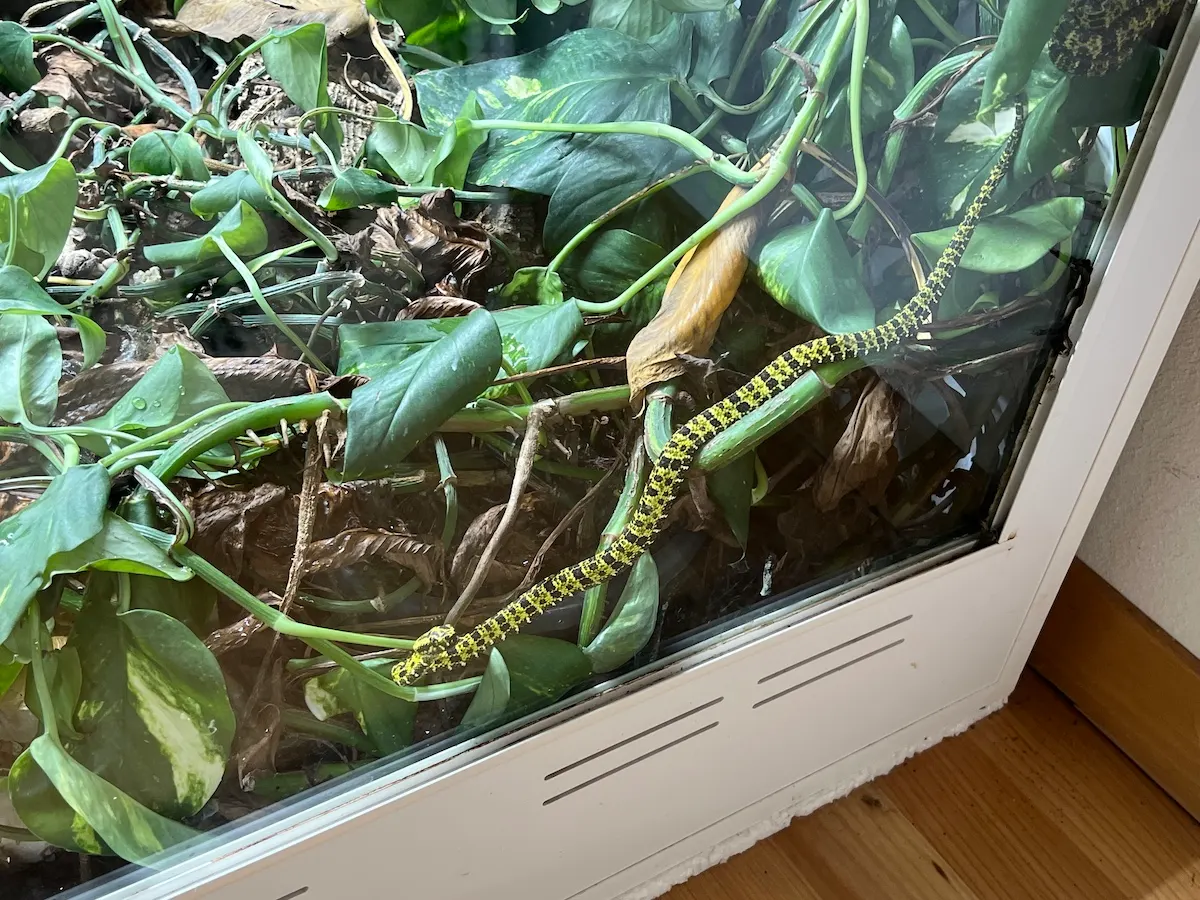
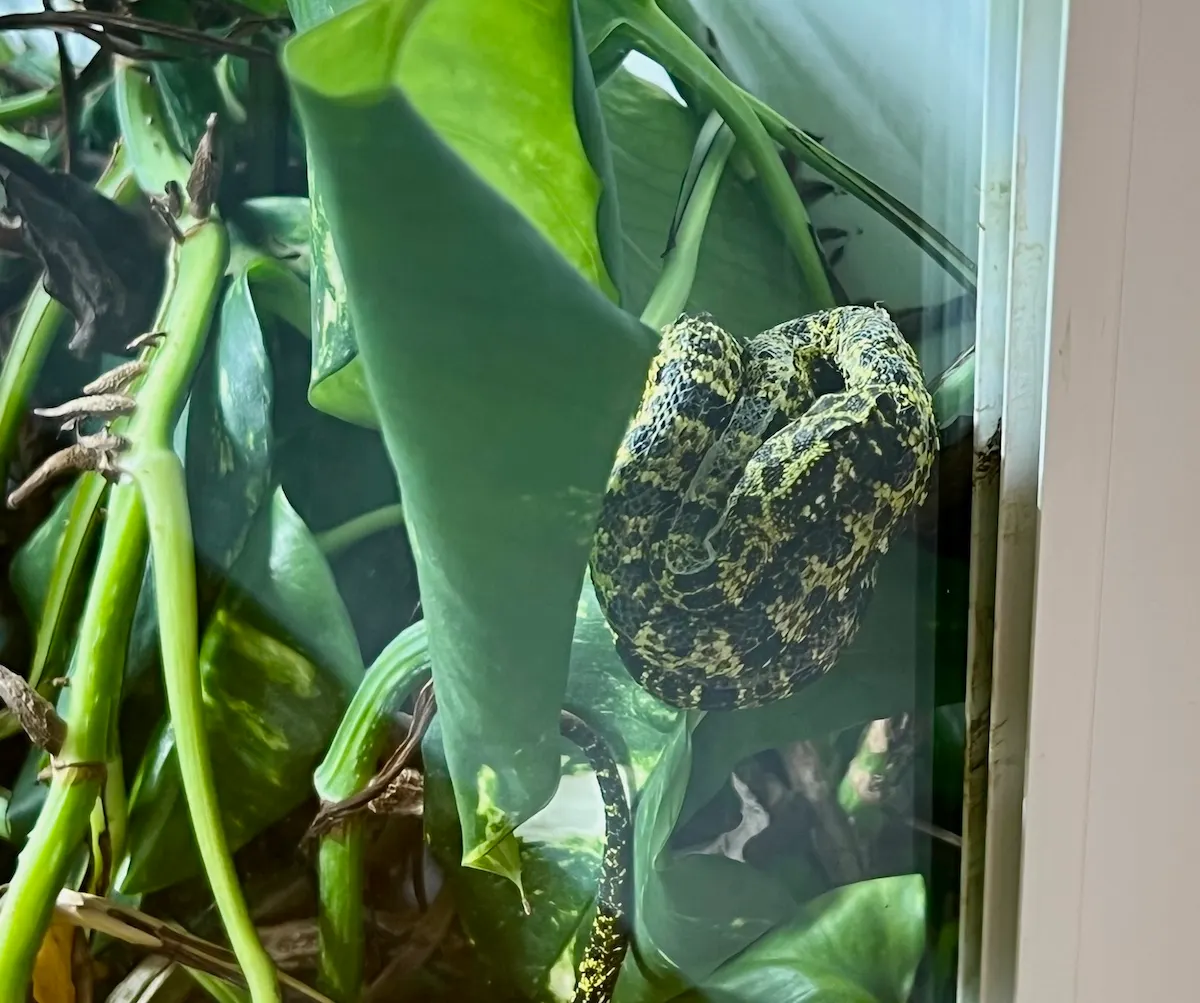
Die dämmerungs- und nachtaktive Bothrops taeniatus sind als Jungtiere gerne auch in der Höhe auf Büschen und im Geäst. Doch schon die kleinen sind zwischendurch auch gerne am Boden, versteckt unter einer Rinde.
Sie mögen es nicht allzuwarm und deshalb sollten die Tagestemperaturen bei den Babys zwischen 24-27 Grad sein und bei den Adulten zwischen 22-26°
Die Nachttemperaturen für die Babys können zwischen 20-23° sein und die der adulten Tiere zwischen 18-22°
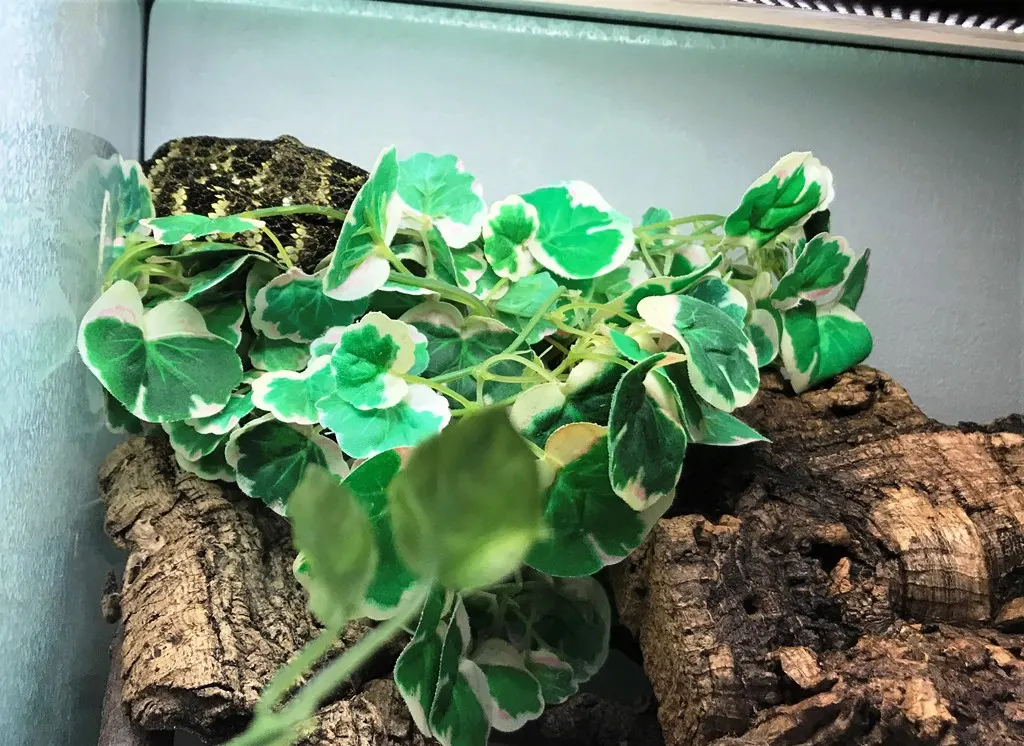
Die Aufzucht erfolgt bei uns einzeln in Glaswürfen. Als Bodensubstrat nehmen wir Gartenmulch. Eine Korkrinde als Versteck, etwas Moos für die Feuchtigkeit und etwas zum Klettern sollte vorhanden sein. Als Sichtschutz eine Pflanze und natürlich ein Wasserbecken dürfen nicht fehlen.
Bei den Babys sollte man 2mal die Woche mit handwarmem Wasser sprühen. Was die adulten Tiere brauchen und mögen kann ich hoffentlich in ein paar Jahren erzählen.
Die Fütterung erfolgt nach dem Licherlöschen. Die Babys bekommen wöchentlich eine Pelzemaus.
Bothrops taeniatus ist Lebendgebährend. Die Wurfgrösse ist zwischen 6-17 Stück. Die Paarung erfolgt in der Regel im Januar und Februar und die Tragzeit beträgt 6-7 Monate. Sie sind zwischen 24-39cm lang und im Verhalten sehr atypisch für Bothrops. Keine Hektik, kein herumbeissen, ruhiges Gemüht.